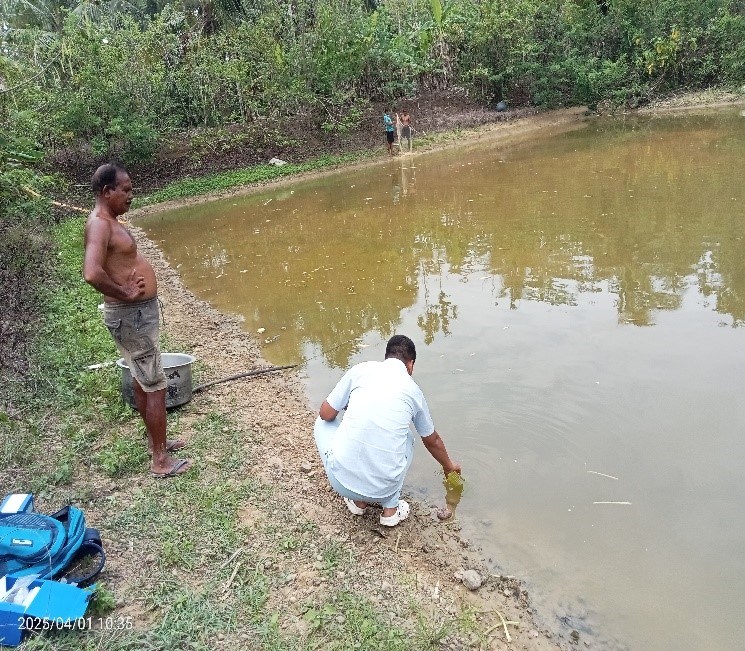


In response to alarming reports of fish mortality following recent unpredicted and intense rainfall in the North and Middle Andaman district, a diagnostic field visit was conducted by Shri Subam Debroy, Subject Matter Specialist (Aquaculture), along with Dr. V. Damodaran, Senior Scientist and Head, ICAR-KVK, Nimbudera. The visit covered key aquaculture sites across the Rangat and Mayabunder blocks, focusing on affected farmers' ponds.The sudden and excessive rainfall led to significant changes in water quality parameters in inland fish ponds, including a sharp drop in water temperature, depletion of dissolved oxygen levels, and fluctuations in pH. Preliminary observations indicated that these abrupt environmental shifts were the primary cause of mortality among commonly cultured species.
During the visit, Shri Debroy conducted on-site water quality testing and interacted with affected fish farmers to assess the extent of the damage. He also provided immediate advisories on remedial measures, including reinforcing pond dikes to prevent the inflow of water from adjacent paddy fields and maintain stable pond conditions. Farmers were advised to operate aeration pumps for at least 30 minutes during the evening hours to enhance oxygen levels and ensure proper water circulation.
It was recommended to apply potassium permanganate at a rate of 200–300 g per 0.1 ha of water area to control bacterial infections and improve overall water quality. The use of a salt solution (1 kg of salt in 50 litres of water) was also advised as a disinfectant. Additionally, the application of agricultural limebased on observed pH levels and water colorwas suggested to regulate pond acidity and promote a healthier aquatic environment.Farmers were sensitized to the importance of regular monitoring of water quality parameters, especially during changing weather conditions, and were encouraged to adopt climate-resilient aquaculture practices.