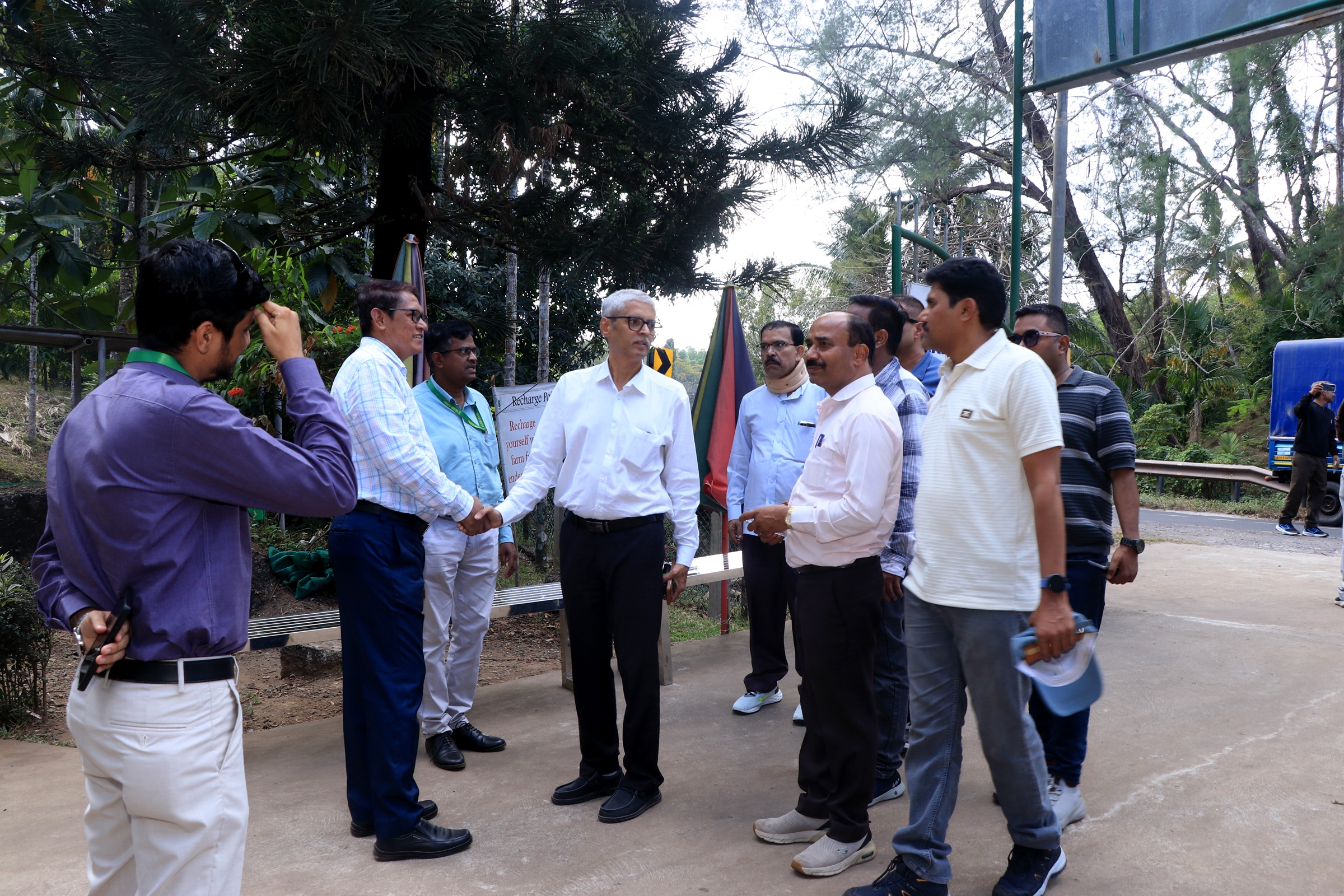


A group of journalists from prominent national and regional print and electronic media
visited the Horticulture Research Farm in Sippighat on 9th February 2026. This delegation
consisted of 41 members, with 12 journalists hailing from Chhattisgarh and 29 from Tamil Nadu.
The team was headed by Shri. Arun Kumar, Director of the Prime Minister’s Communication Cell
& PIB Chennai, alongside Shri Ramesh Jaibhaye, Deputy Director of PIB Raipur. The event
commenced with a cordial welcome address delivered by Dr. Jai Sunder, Director of ICAR-CIARI,
Sri Vijaya Puram. Following this, the delegates were escorted around the farm by Dr. Ajit Arun
Waman, Senior Scientist and In-charge of Sippighat Farm, who provided insights into the
institute’s agro-eco-tourism initiatives along a 1-km eco-tourism trail.
Covering an area of 32 hectares, the Sippighat Research Farm exhibits a rich variety of
plantation crops, tropical fruits, spices, and ornamental plants. It offers visitors the chance to learn
about scientific plant husbandry practices and acquire quality planting materials. The agro eco
tourism theme focuses on nature conservation, sustainability, and the appreciation of scenic beauty.
A significant highlight of the visit was the World Coconut Germplasm Centre (WCGC), which
conserves nearly 1,000 coconut palms that represent unique germplasm sourced from Asia-Pacific
Island nations and the Nicobar group of islands. The centre maintains 30 conserved coconut
accessions, which include 24 original collections from Pacific Ocean islands namely, Solomon
Islands, Fiji, Papua New Guinea, French Polynesia, American Samoa, Tonga, and Samoa—as well
as six accessions from the Nicobar Islands, all preserved within the field gene bank at Sippighat.
The World Coconut Germplasm Centre (WCGC) is a leading institution focused on the
conservation, assessment, and sustainable use of coconut genetic resources. It functions as a living
repository of various coconut accessions that represent island and coastal ecosystems from both
India and other countries. Coconut is a crop of significant economic, nutritional, and cultural value,
especially in tropical island areas. Acknowledging the necessity to preserve its rich genetic
diversity, the World Coconut Germplasm Centre was founded to protect valuable indigenous and
exotic coconut collections from genetic erosion due to climate change, pests, diseases, and
evolving land-use patterns. The Centre houses a diverse array of tall, dwarf, and hybrid coconut
varieties, including locally adapted island genotypes as well as introductions from the Indian
Ocean and Pacific regions.
The Germplasm Centre is essential for genetic conservation, maintaining field gene banks
under island agro-climatic conditions. These conserved accessions serve as the basis for long-term
crop improvement initiatives. Researchers utilize the germplasm to characterize and evaluate key
traits such as yield potential, nut quality, pest and disease resistance, tolerance to abiotic stresses,
and adaptability to coastal and island environments.
In addition to conservation efforts, the Centre serves as a crucial research and breeding
resource. The genetic materials preserved here support national and regional programs aimed at
developing enhanced coconut varieties that meet farmers' requirements, particularly in vulnerable
island ecosystems. Furthermore, the Centre plays a role in bolstering climate-resilient agriculture
by identifying and promoting coconut varieties that can endure salinity, moisture stress, and
extreme weather conditions.
The World Coconut Germplasm Centre at ICAR-CIARI functions as a significant
educational and outreach platform. It is often highlighted during scientific visits, farmer
interactions, training programmes, and awareness events, aiding stakeholders in comprehending
the diversity and potential of coconut genetic resources. The Centre underscores India’s dedication
to the conservation of global plant genetic resources and the advancement of sustainable
horticultural development. In summary, the World Coconut Germplasm Centre at ICAR-CIARI
serves as an essential hub for the preservation of coconut biodiversity, the promotion of scientific
research, and the support of sustainable livelihoods in island and coastal areas. It plays a crucial
role in ensuring that this "tree of life" continues to contribute to food security, income generation,
and ecological balance for future generations.
The delegates also received a briefing on current research initiatives, which include inter
se mating, pollen collection, selfing, germplasm multiplication, and hybridization programs.
Comprehensive characterization of palm morphology has been conducted on six tall coconut
accessions Rennel Tall, Katchal Tall, Auck Chung Tall, Tahiti Tall, Tamaloo Tall, and Pao Pao Tall
which have demonstrated potential for crop enhancement due to increased nut yield, improved
virgin coconut oil extraction, and favorable nut characteristics.
Furthermore, studies on palm morphology concerning the Niu Leka dwarf, noted for its
distinctive orange-colored fruits, have recognized it as a unique genetic resource originating from
the Niu Leka Green dwarf population. Ongoing observations are being conducted to enhance the
selection of superior mother palms aimed at developing compact dwarf coconut varieties that are
appropriate for future breeding initiatives.
Other significant attractions at the agro-eco-tourism site included the Spice Processing
Unit, a specialized facility where a diverse array of spices is processed through a combination of
traditional methods and contemporary techniques. The Mangrove Viewpoint provided delegates
with a tranquil view of lush mangrove forests, showcasing their rich biodiversity and peaceful
natural environment. Visitors also enjoyed the Nature Trail, a serene one-kilometer walking path
that enables guests to breathe fresh air, closely observe nature, burn calories, and refresh both body
and mind. Additionally, the delegates explored the Plantation-Based Organic Spice Garden, where
they acquired knowledge about traditional and organic spice cultivation methods.
This visit was coordinated by Shri D. Karunakaran, Scientist and all under the leadership
and guidance of Dr. Jai Sunder, Director of ICAR-CIARI, Port Blair.